

In short
Commercial heating system repairs deal with faults in how heat is distributed around a building, such as cold floors or zones, radiators hot at the top and cold at the bottom, stuck zone valves, air in the system and poor circulation. Engineers trace the heating circuit from the plant room to the affected areas to find the cause rather than adjusting settings by trial and error.
What the work may involve
- Cold zone and uneven heating investigations
- Zone valve and actuator repairs
- Radiator, emitter and thermostatic valve repairs
- Venting air and resolving circulation problems
- System balancing checks
- Leak repairs on heating pipework
Warning signs to report
- Some floors or rooms cold while others are warm
- Radiators cold at the bottom or not warming at all
- Gurgling or noisy pipework
- Heating slow to warm up in the morning
- Visible leaks or damp patches near heating pipework
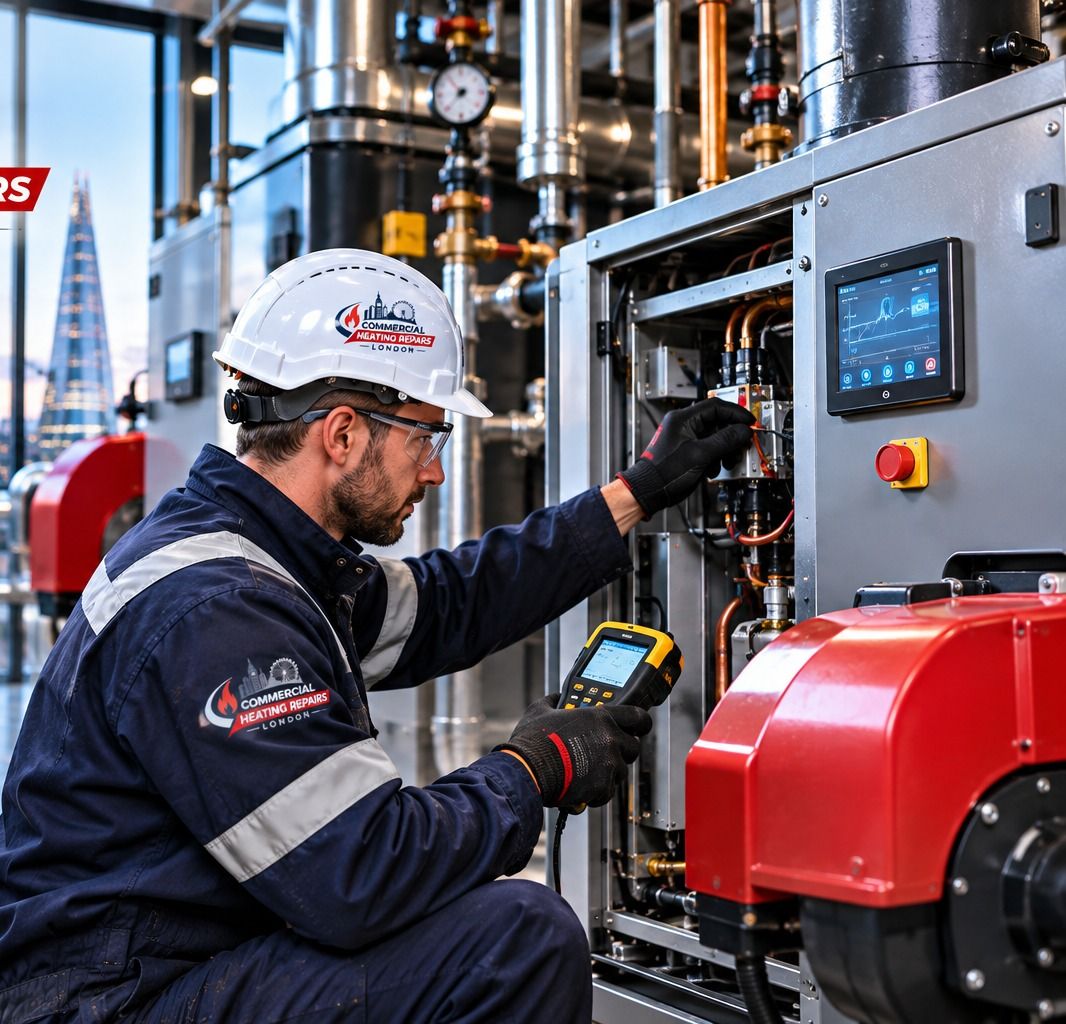
How heat gets from the boiler to the building
Commercial heating systems pump hot water from the plant room through flow and return pipework to heat emitters such as radiators, fan convectors or underfloor circuits. Zone valves and controls decide which areas receive heat. A failure anywhere in that path can leave an area cold while the boiler runs normally.
Common heating system faults
| Symptom | Likely areas to investigate |
|---|---|
| A whole floor or zone cold | Zone valve, actuator, zone schedule, circulation |
| Individual radiators cold | Thermostatic valve, air, balancing, blockage |
| Cold at the bottom of radiators | Sludge, debris, low flow |
| Slow morning warm-up | Optimiser settings, pump performance, plant capacity |
| Gurgling pipework | Air in the system, low pressure |
These are possible causes rather than a diagnosis.
Fix the cause, not the symptom
Turning up setpoints or running heating longer can hide a circulation fault while increasing energy use. Engineers check pumps, valves, air and controls together, then repair what has actually failed. Where system water is dirty, they may recommend cleaning and treatment so the problem does not return.
Related repairs
Circulation faults often lead to pump and pressurisation repairs. If the problem is scheduling or sensors, see controls and BMS.
Need heating system repairs help?
Send the equipment details, symptoms, fault codes and site address through Flair Facilities Ltd, or call to talk it through.
Heating System Repairs FAQs
Why is one part of the building cold when the boiler is running?
A running boiler only shows heat is being produced. Uneven heating usually relates to circulation, zone valves, air in the system, balancing or controls. An engineer needs to check the distribution side as well as the plant.
Why are radiators hot at the top and cold at the bottom?
This can indicate sludge or debris in the system, though flow and balancing problems can produce similar symptoms. System water condition may need checking.
Can we bleed radiators ourselves?
Only if you are trained and authorised under your site procedures. In sealed commercial systems, venting affects system pressure, so it should be done with the pressurisation equipment in mind.
Is uneven heating a controls problem?
Sometimes. Zone schedules, sensors and valve actuators can all cause uneven heating. See controls and BMS repairs.
Useful UK references
- Workplace temperatures Health and Safety Executive
Last reviewed 24 November 2026. General guidance only; it does not replace a qualified site-specific assessment.